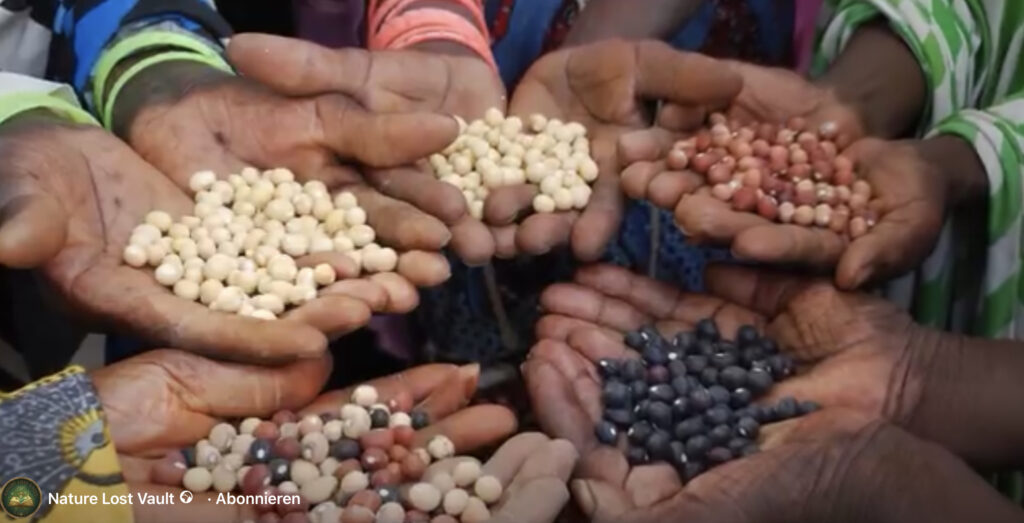
European colonialists destroyed local food sovereignty to make way for industrial crop cultivation. In North America, they wiped out the bison so that they could raise cattle and grow wheat on the prairies instead. In West Africa, they distributed peanut and soybean seeds free of charge to local farmers so that they could produce oil for export, thereby displacing the traditional Bambara groundnut (Vigna subterranea), a legume that had provided the local population with a cheap, resource-efficient and nutritious staple food that did not depend on imported fertilisers and minerals for its cultivation.
Whereas peanut and soya monocultures depleted and dried out the soil, causing hunger among the local population and making them dependent on food aid, Bambara groundnuts had once enriched the soil with nitrogen, required less water, and had been a reliable source of food.
Fortunately, some locals still grow Bambara groundnuts, so this practical knowledge is not being lost. Yet even development agencies and organisations continue to discuss how to breed more resilient seeds using smart genetic engineering, whilst still viewing Bambara groundnuts as an inefficient, outdated and ’underutilsed’ agricultural product.
Source:
[1] Watch this video (14’) for more information:
https://www.facebook.com/reel/4447264422172320
Kommentare, Fragen
bitte an mich senden an, samt der Angabe, ob ich den Kommentar hier unter deinem Namen veröffentlichen darf.